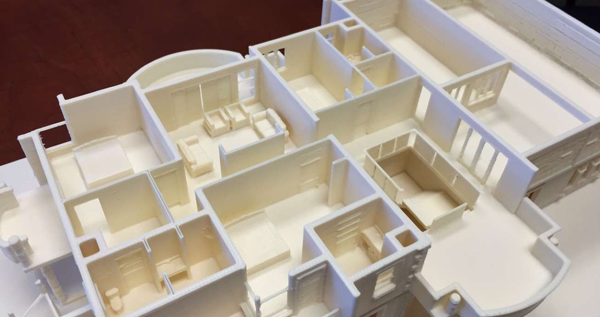
2D & 3D Printing Designing
2D & 3D Printing Designing on Projects and products for business development.
Alwik - Tec is working on 2D & 3D Printing Designing on Projects and products for business development. And all the prototype is done accoding to our client requerment.
2D printing design
What is it?
2D printing design focuses on creating visual representations that are essentially flat, using only length and width. It's the process of preparing images, text, and graphics for printing on a 2D surface like paper or fabric.
Key design considerations
- Color and Resolution: Ensuring sharp, vibrant colors and high-resolution images for optimal print quality.
- Typography: Selecting fonts and text treatments that are legible and impactful within the design.
- Layout and Composition: Arranging elements visually pleasingly and effectively conveying the message.
- File Formats: Using appropriate formats like PDF, JPEG, or TIFF for 2D printing to ensure compatibility and maintain quality.
Software and applications
- Software: Tools like Adobe Photoshop, Illustrator, CorelDraw, and Canva are commonly used for 2D design.
- Applications: Posters, flyers, brochures, business cards, book covers, packaging, and textiles are all common examples of 2D printing applications.
3D printing design
What is it?
3D printing design, also known as additive manufacturing design, focuses on creating digital models for physical objects with three dimensions: height, width, and depth. These designs are built layer by layer using various materials like plastics, resins, or metals.
Key design considerations
- Wall Thickness and Strength: Ensuring the design's structural integrity and ability to withstand stress.
- Material Selection: Choosing materials with appropriate properties for the intended use of the object.
- Overhangs and Supports: Designing with overhangs in mind and strategically incorporating supports where needed to prevent deformation during printing.
- Detail and Resolution: Balancing the desired level of detail with the limitations of the chosen printing method.
- Build Volume and Orientation: Considering the printer's build volume and orienting the model to optimize print time and quality.
Software and applications
- Software: CAD (Computer-Aided Design) software like AutoCAD, SolidWorks, Fusion 360, Blender, and SketchUp are widely used for creating 3D models. Slicing software like Cura and PrusaSlicer translates these designs into printable instructions.
- Applications: Rapid prototyping, creating custom medical devices, aerospace and automotive parts, architectural models, and consumer goods are some of the diverse applications of 3D printing.
The relationship between 2D and 3D printing design
While distinct in their output, 2D designs can serve as the foundation for 3D models. For example, a 2D technical drawing can be used as a blueprint for a 3D part.
The key difference lies in the added dimension and the implications it has for the design process. 3D printing allows for greater design freedom and customization, but requires specialized software and a deeper understanding of material properties and printing mechanics.
Call to ask any question
+91 7995 162 123